The Adventures of Dasein:
From the Origins of Language to the End of Print Literacy in the United States
| When philosophy paints its grey in grey, one form
of life has become old, and by means of grey it cannot be rejuvenated,
but only known. The owl of Minerva takes its flight only when the
shades of night are gathering. Hegel, Philosophy of Right, preface
|
mirror mirror on the wall . . .  |
What I
relate is the history of the next two centuries. I describe what
is coming, what can no longer come differently: the advent of
nihilism.
Nietzsche, Will to Power, preface
|

UAW Unity Caucus, 1936-39/41 Ike and McCarthy: Dwight Eisenhower's Secret Campaign against Joseph McCarthy ●
Eli Zaretsky, "The Mass Psychology of Trumpism" (London Review of Books, 18 September 2018) Dick Lehr, White Hot Hate: A True Story of Domestic Terrorism in America's Heartland (Mariner Books, 2021) |
"Trump" forces us to face the question of our primate heritage (and its corrolary, patrimonialism),
on the one hand, and the fragility of print-based civilization, on the other.
| This site is a rhizome. Its principle of production is transcendental empiricism. It uses figurative elements, including graphs, tables, charts, and maps, originally to advance an analysis of the historical trajectory: the New Deal to Donald Trump, but the events of the second decade of the 21st century, when viewed through the lens provided by The Social Origins of Language, forced me to see that there was a bigger picture. This bigger picture is represented by Figure 0.1. From the Origins of Language to the End of Print Literacy in the United States. Figure 0.1 is the irreducible minimum if one is to understand the New Deal, "Trump," and the historical path connecting them. This is because "Trump" forces us to face the question of our primate heritage and its corrolary, patrimonialism), on the one hand, and the fragility of print-based civilization, on the other. Taking into account the major perspectives on the development of language and cognition, and applying these results and methodologies to the cognitive-discursive performativities of schooling, politics, and the media, we are led to a chilling conclusion: we are now living through the disintegration of the cognitive-discursive performativities associated with the biocultural niche of modernity. What is happening now is beyond the scope of current popular and much scholarly thought, which is economistic in character and Cartesian in its metaphysical presuppositions. Cognitive performativity is a context-dependent, biocultural historical phenomenon, not explicable within a discursive field shaped by the Cartesian synthetic a priori. The election of Donald Trump is a lagging indicator of the disintegration of cognitive performativities. |
|
History
without philosophy
History without philosophy is only a screen on which to project the shibboleths of our time. Thinking must first emancipate itself from the Cartesian myth--the ontological presupposition of the Cartesian self and its associated rhetorical elements of consciousness, belief, motive, ideology, and interest. Failure to do so has the effect, a priori, of blocking conceptualization of questions of ontology, sensibility, agency, intentionality, habitus, action networks and networks of power, and context. This failure is evident in media and academic discourse on "Trump". An approach to unravelling the mystery of "Trump" is to proceed with an immanent critique of "Marxism". 1. Marxism does not address the problematic of "cognition and emotion as two interrelated aspects of human functioning,"1 and for this reason alone is unable to understand "Trump." 2. Marxists don't seem to be interested in actually existing configurations of capital, nor are they open to the reality of elite competition in an electoral environment, and the way in which that can produce outcomes not reducible to "class interests" ("Trump"). "Trump" is the inevitable outcome of the post-New Deal development of the two-party system, not an anomaly. "Trump", in terms of American politics, and genealogically speaking, is a moment in the unfolding of Thermidor. 3. And Marxists still have no idea of where the New Deal came from, what it was, and what happened to it. 1. Mary Helen Immordino-Yang and Antonio R. Damasio, “We Feel, Therefore We Learn: The Relevance of Affective and Social Neuroscience to Education,” in Emotions, Learning, and the Brain: Exploring the Educational Implications of Affective Neuroscience (W. W. Norton & Company, 2015) | Five Approaches to Cognitive-Discursive Performativity (aka Intelligence))  |
The New Deal in a Nutshell (elites, action networks and networks of power, events, process ontology, liminality and sensibilities)
| the Keynesian Elite in the New Deal State: Intersubjectivity, Shared Intentionality, and the Extended Mind  |
The
UAW-Unity Caucus, 1933-1943: Intersubjectivity, Shared Intentionality, and the Extended Mind: Bildungsproletarians and Plebeian Upstarts  |
|||||||||||||||
Configurations of Capital |
Midland Steel: Layout with Work-Flow (drawn by Art Lamb, Works Manager) 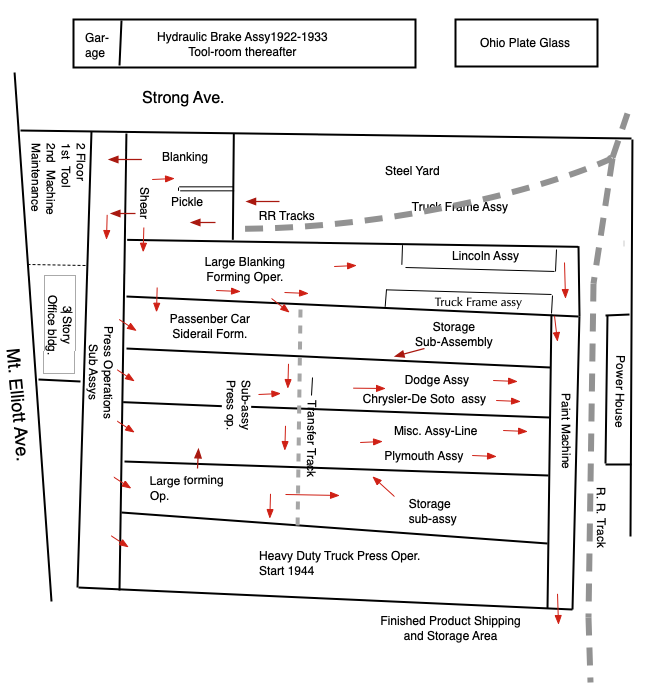 In this interview Joe Bidinger describes the step-by-step movement of metal from raw input to finished output. |
|||||||||||||||
|
Configurations of Capital The Taylor Society, Mass Distribution Sector, 1927 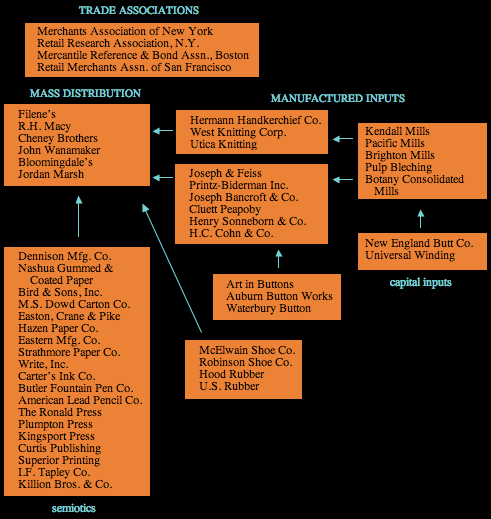 Source: "Membership List, May 1927" in the Morris L. Cooke Papers, box 66, FDR Library |
Liminality and Sensibilities Michigan Steel Tube (UAW 238): the Lewis incident  |
|||||||||||||||
|
The Two-Party System (Semiotic Regimes): Elites and their Masses
MSNBC/CNN/ New York Times/Washington Post NIHILISM (Liberalism)
BILDUNG (Progressivism)
Commercial republicanism Civic republicanism
concrete-operational and formal-operational and pre-operational concrete operational 
Fox News
RESSENTIMENT
Fascism
pre-operational and gestural
rentier sectors; provincial capitals; patrimonial
and predatory businesses and racist political ecologies |
 ↑ ↑ Dodge Main Midland Steel |
|||||||||||||||
|
The Two-Party System (Semiotic Regimes ):
Cognitive Performativities and Emotional Configurations 
|
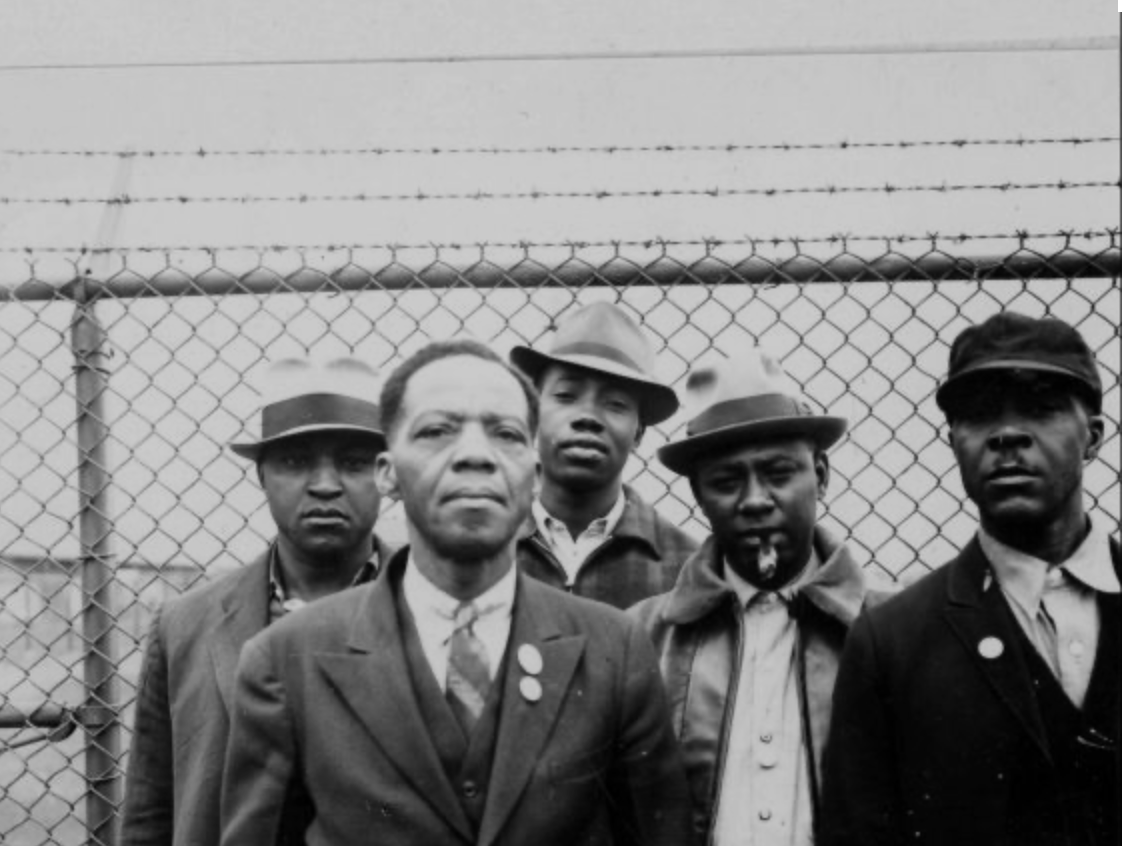
 Joe Adams, Paul Silver, Edmund Kord |
|||||||||||||||

|
|
| Fascism | January 6, 2021 |
| Geoff Eley, Nazism as Fascism: Violence, Ideology, and the Ground of Consent in Germany, 1930-1945 (Routledge, 2013)
So what is the nature of the present crisis? Confining myself to
the United States and by extension to other parts of the
late-capitalist world . . . I want to suggest the following elements.
First, beginning in good Marxist fashion from the current transformations of economic life, I would foreground the still unfolding consequences of fundamental capitalist restructuring. That would include deindustrialization; the dismantling of Western capitalism's historic manufacturing base; post-Fordist transitions; the transnationalization of labor markets and the re-proletarianizing of labor; a new regime of accumulation ordered around the mobility of capital and the spectacle of consumption; a regime of regulation ruthlessly validating private accumulation and the gutting of public goods; and the hypertrophied dissorder of a deregulated financial center whose dominance is severed (or freed) from any apparent mechanism of accountability or relationship to productive investment [see FF to FDR]. This first element--the fiscal crisis of late capitalism -- has profound implications for the conduct of government, for the reliable stabilities of political order, for the organized distribution of state power, and for the practice sovereignty. Second, the entailment of late capitalist restructuring is a drastic and thoroughgoing process of class recomposition. Class formation in the United States is always highly regionalized, always porous to cross-border migrancy on a vast scale, always structure around race, always subject to extraordinarily effective mystification, always construed into being something else [CDP]. Yet, by any objective criteria, the working class of today — as a social category of wage-earners dependent for a livelihood on the sale or exchange of labor power — is larger, less secure, and less reliant on the collective solidarities of residence, workplace, associations, and organized political agency than ever before. Of course, even in the 1950s and 1960s the social citizenship of some workers ( mainly skilled, male, white) — their job security, higher wages and greaer benefits, access to healthcare and housing, expectation of pensions, limited recognition under the law — always. presupposed a much wider reservoir of cheap and disposable labor power (mobil, low-waged, insecure, unprotected), whether located inside the sovereign borders or iin the neocolonial elsewhere. In these terms, the postwar experience of relatively humanized capitalism remained no less beholden to globalized systems of exploitation of natural resources, human material, and grotesquely unequal terms of trade than the preceding era of imperialist expansion. Postwar gains were embedded in the privileged prosperity of a metropolitan boom whose very possibility rested on historically specific repertoires of extraction and exploittion eperating on a world scale. But now even that relative working-class prosperity stands reveal as a finite and passing phenomenon. At an ever-accelerating pace, the social relations of work have been t ransformed since the 1980s into the new low-waged, semi-legal, and deregulated labor market of a maiinly service-based and transnationalized economy. This as-yet unstoppable story of the de-skilling, de-unionizing, de-benefiting, and de-nationalizing of labor via the rampant processes of metropolitan deindustrialization and global capitalist restructuing has comprehensively undermined the model of significant social improvement around which so much of postwar poltical culture became built. Not the least of the changes under way since the 1970s is thus a re-proletarianization of labor. From our vantage point now [2013 pub. date] the relative working-class prosperity of the postwar boom re-emerges as a highly contingent interlude in the life of a capitalist social formation whose ordering principles look very different over the fullest span of its history. From the mid 1970s, every element in the potentially democratizing architecture of a postwar political imaginary was brought under brutally effective political attack.[Stayin’ Alive; Williams/Pontiac] By the 1990s, little remained of either the practices or the principles, let alone the material structures and institutional relations previously organizing the political common sense. The Social contract associated with the New Deal and the Great Society was gone. (pp. 215-216) . . . . This new dialectic of international conflict and societal crisis may well enable a politics that resembles fascism to coalesce. |
Data
This is part of a larger sample that was the basis for discussions between PF and RB that led to a series of reconceptualizations, methodological as well as substantive, and is provided so that the reader can have some idea of what we were working with. The failure of much of local journalism to provide basic facts re. employment (occupation and industry) led me to cut short my efforts to do all 212 individuals that I was working with. As it turned out, this was sufficient material to think about, analyze, and draw conclusions from. Regional breakdowns. This was the second step in arriving at the tables of arrestees from selected states that became the basis for the comments on this page. Geography matters!  New England Southeast (north) Southeast (south) Mideast Great Lakes Plains Southwest Rocky Mountain Far West As we reviewed these materials, it became increasingly evident that the analysis out of the University of Chicago (and mainstream media coverage in general) failed to comprehend the major features of the dataset Arrests Arising out of the Assault on Congress. Summary of findings
A close look at
the January 6 arrestees reveals that, contrary to the respectable
media, which claimed that "the
angry crowd at the Capitol . . . seemed to come
not from the fringes of American society but from white picket-fence
Main Street backgrounds,"1 what is found instead is a population in the process of
marginalization. The instability in their lives was manifested in
the difficulty of category formation. The standard occupational
and industry classifications2 are inadequate, indeed
misleading. Gyms, bars, tatoo parlors, restaurants, salons, and
gun shops occur regularly in the entire dataset. To view the
individual owners of these establishments solely in terms of their role
as "shop owners" is misleading. What we are really dealing with
is social networks, not Cartesian selves. Very few if any of the
arrestees were connected to mainstream occupations and industries: none
in manufacturing, none in the building trades, none in the modern
corporate sector. They could be better characterized as grifters.
This is a challenge to the neat concept of class. population in the process of
marginalization. The instability in their lives was manifested in
the difficulty of category formation. The standard occupational
and industry classifications2 are inadequate, indeed
misleading. Gyms, bars, tatoo parlors, restaurants, salons, and
gun shops occur regularly in the entire dataset. To view the
individual owners of these establishments solely in terms of their role
as "shop owners" is misleading. What we are really dealing with
is social networks, not Cartesian selves. Very few if any of the
arrestees were connected to mainstream occupations and industries: none
in manufacturing, none in the building trades, none in the modern
corporate sector. They could be better characterized as grifters.
This is a challenge to the neat concept of class.1. from the New York Times (January 26, 2021): "One striking aspect of the angry crowd at the Capitol was how many of its members seemed to come not from the fringes of American society but from white picket-fence Main Street backgrounds — firefighters and real estate agents, a marketing executive and a Town Council member." 2. North American Industry Classification System (U.S. Census Bureau) Standard Occupational Classification System (Bureau of Labor Statistics) |
From FDR to Donald Trump
Literacy and Cognitive Development: measures of cognitive-discursive performativity
| these
minutes provide us with a benchmark against which to measure Trump's
cog-disc perf. Note the flow of the discussion: the coherence
and the dense facticity of these performances. The focus and
attentivity. This is concrete operational c/d performativity at
the highest level. Toward the end of the meeting Reuther tried to initiate a discussion of a strategic coalition between the progressive manufacturers in the spring council and the UAW. ie, he atttempted to move from the concrete to the hypothetical Read these minutes. Then read A Very Stable Genius, chapter 9, "Shocking the Conscience." This Trump's on-the-job peformance, and it is not even conrete operational. It is pre-operational. |
the murray body spring committee meeting, April 26, 1939
Minutes of the Murray Body Committee Local 2 at Executive Board Meeting, April 26, 1939, Toledo Ohio, Addes Collection, Box 14.11, Reuther Archives. re. the competitive situation in the spring industry.
The members of the Local 2 Committee were:
Brother Hall from Spring & Wire Brother McDonnell from Stamping Brothers Sanders and McWilliams from Trim Brother Smith from Frame (Ecorse plant) Brother Manini, Vice President Also present: Executive Board member Walter Reuther |
The Meeting in the Tank, July 20, 2017
Trump's meeting with the Joint Chiefs in the Tank on July 20, 2017 provides us with a spectacular example--a performative tour-de-force--of this accelerating disintegration of discursive and cognitive performativity. We have a detailed description of this meeting in A Very Stable Genius, chapter 9, "Shocking the Conscience." A close reading of that chapter can be found here. The chapter in its entirety can be found here. The most striking aspects of the Tank meeting, as reported in A Very Stable Genius, are the primitive cognitive performativity of The Great Leader, his brutish behavior toward the Joint Chiefs, and the degree to which the Joint Chiefs were flabergasted by this brutish stupidity. "He's a fucking moron", said Rex Tillerson. (Slate, "The Great Leader's Nuclear Meltdown", October 11, 2017.) |
A History of Reading and Writing In the Western World
|

American Exceptionalism
|
Nicholas Kristof, "McDonald’s Workers in Denmark Pity Us," New York Times, May 8, 2020 Think
of it this way. Workers at McDonald’s outlets all over the world tend
to be at the lower end of the labor force, say the 20th percentile. But
Danish workers at the 20th percentile are high school graduates who are
literate and numerate.
In contrast, after half a century of underinvestment in the United States, many 20th-percentile American workers haven’t graduated from high school, can’t read well, aren’t very numerate, struggle with drugs or alcohol, or have impairments that reduce productivity. | from Maryanne Wolf, Reader Come Home: The Reading Brain in a Digital World (Harper Collins, 2018), p. 179 The
seriousness of the current reality means that at the present rate, the
majority of eighth-grade children could be classified as functionally
illiterate in a few years' time.
|
 Source. "How Other Nations Pay for Childcare. The U.S. is an Outlier" (New York Times, October 6, 2021) |
| Neuroplasticity vs. Racism |
| from Merlin Donald, A Mind So Rare: the Evolution of Human Consciousness (W.W. Norton, 2001), pp. 301-2 . . . modern
culture contains within it a trace of each of our previous stages of
cognitive evolution. It still rests on the same old primate brain
capacity for episodic or event knowledge. But it has three
additional, uniquely human layers: a mimetic layer, an oral-linguistic
layer, and an external-symbolic layer. The minds of individuals
reflect these three ways of representing reality. 262
Something about our mentality changed in the past few millenia, something that made us able to construct such exotic things as symphonies, philosophies, oil refineries, nuclear weapons, and robots. Do such achievements have implications for theories of consciousness? Many would deny that they do. They would claim that the parameters of mind were surely fixed long ago, when we emerged as a species, and that culture can add nothing to an equation written deeply into the human genome. The human mind is so plastic in the way it carries out its cognitive business, individually and in groups, that the core configuration of skills that defines a mind actually varies significantly as a function of different kinds of culture. This is especially true of the most conscious domains of mind, such as those involved in formal thinking and representation. Literacy skills change the functional organization of the brain and deeply influence how individuals and communities of literate individuals perform cognitive work. Mass literacy has triggered two kinds of major cogitive reorganizations, one in individuals and the other in groups. To become fully literate, the individual must acquire a host of neural demons that are completely absent from anyone who lacks literacy training. This involves massive restructuring. There is no equivalent in the preliterate mind to the circuits that hold the complex neural components of a reading vocabulary or the elaborate procedural habits of formal thinking. These are unnatural. They have to be hammered in by decades of intensive schooling, which changes the functional uses of certain brain circuits and rewire the functional architecture of thought. This process can be very extensive. Consider the impact of twenty or more years of schooling on the brain of someone who has acquired full symbolic literacy in several different technical, mathematical, scientific, and musical fields. These skills encumber neural resources on a vast scale and change how the person's mind carries out its work. |
| from Stephen J. Ceci, On Intelligence: A Bioecological Treatise on Intellectual Development, expanded edition (Harvard University Press, 1996) As
one moves from one situation to another, is enough to cause shudders in
some research quarters. It represents a move toward a psychology
of situations . . . xvi
The term intelligence is often used synonymously with "IQ", "g", or "general intelligence", especially in some of the psychometric literature. . . however, the ability to engage in cognitively complex behaviors will be shown to be independent of IQ, g, or general intelligence . . . cognitive complexity will be seen to be the more general of the two notions and the one most theoretically important to keep in mind when referring to intelligent behavior. 22 The literature that we reviewed demonstrates that it is not sufficient for one to be biologically endowed with a cognitive potential and even to be exposed to appropriate opportunities for its crystallization: One also must be motivated to benefit from this exposure. Performance is influenced by learning, refinement, shaping, etc., and the role of motivation cannot be ignored in such matters. Extrinsic motivators (such as the value that one attaches to attaining success on a task), as well as intrinsic motivators (inculcated through various parenting styles, such as fostering autonomy, valuing schooling, and adopting a modern world view . . ) are equally important in shaping cognitive outcomes. 116 |
Modernity Reconceptualized as the Biocultural-historical Infrastructure of Science, Organization, and Technology
| from Karl Marx, 1844 Economic and Philosophic Manuscripts For
not only the five senses but also the so-called mental senses, the
practical senses (will, love, etc.), in a word, human sense, the human
nature of the senses, comes to be by virtue of its object, by virtue of
humanised nature. The forming of the five senses is a labour of the
entire history of the world down to the present.
|
from
Mary Helen Immordino-Yang and Antonio R. Damasio, “We Feel, Therefore
We Learn: The Relevance of Affective and Social Neuroscience to
Education,” in Emotions, Learning, and the Brain: Exploring the Educational Implications of Affective Neuroscience (W. W. Norton & Company, 2015) .
. . learning is dynamic, social, and context dependent because emotions
are, and emotions form a critical piece of how, what, when, and why
people think, remember, and learn. (p. 17)
In general, cognition and emotion are regarded as two interrelated aspects of human functioning. (p. 36) |
from John Dupré, "Causality and Human
Nature in the Social Sciences," in Processes
of Life: Essays in the Philosophy of Biology (Oxford,
2012) I wish to emphasize particularly the ability of cultural evolution to
transform the developmental niche. And here, at least in
contemporary developed countries, it seems clear that humans have
learned in quite recent times to construct a remarkably novel
environment for the development of their young. . . . [T]hese
prodigious changes to the human environment, concretizations of our
rapidly evolving culture, profoundly affect the developmental resources
available to growing humans. For that reason their
introduction should be seen as representing major evolutionary change.
(284)
|
Formal Operational Thought and Modernity
|
from James R. Flynn, What is Intelligence? Beyond the Flynn Effect (Cambridge Univesity Press, 2009): xxx Our ancestors in 1900 were not
mentally retarded. . . . We differ from them in that we can use
abstractions and logic and the hypothetical to attack the formal
problems that arise when science liberates thought from concrete
situations. Since 1950 we have become more ingenious in going
beyond previously learned rules to solve problems on the spot.
pp. 10-11
The scientific ethos, with its vocabulary, taxonomies, and detachment of logic and the hypothetical from concrete referents, has begun to permeate the minds of post-industrial peoples. This has paved the way for mass education on the university level and the emergence of an intellectual cadre without whom our present civilization would be inconceivable. p. 29 |
from from David R. Olsen, The Mind on Paper: Reading, Consciousness, and Rationality (Cambridge, 2016) 016) To
understand the cognitive implications of literacy it is also necessary
to see writing not only as a tool for solving problems but rather as a
generalized means or medium for repesentation and communication that
give rise to those unique forms of human competence we in modern
society define as intelligence and rationality.
from Anthony Orton, Learning Mathematics: Issues, Theory, and Classroom Practice (Continuum International Publishing Group, 2004) Nevertheless, the terminology
'concrete operations', 'formal operations', is still apparently found
to be useful by those reporting on empirical research, and by many who
write about child development and curriculum reform. p.68
|
from Jeremy E. C. Genovese, "Piaget, Pedagogy, and Evolutionary Psychology" (Evolutionary Psychology, Volume 1, 2003) Tamburrini (1982) pointed out
that “there is considerable evidence that formal operational
thought is contextually bound” (p. 319). This is no small
concession; the very point of formal operations is that they go beyond
context and content. The failure of adolescents and adults to
reason in the ways predicted by Piaget is a serious problem for both
the theory and practice of education, for it is precisely the formal
reasoning skills that are necessary for mastering academic subjects
such as math and science beyond the elementary level. p. 130
Biologically primary abilities are acquired universally and children typically have high motivation to perform the tasks involving them. In contrast, biologically secondary abilities are culturally determined, and often tedious repetition and external motivation are necessary for their mastery. From this perspective it is understandable that many children have difficulty with reading and higher mathematics (p. 63). p. 131 |
| Anthony
Fauci on Trump's attention span (from Salon (9-9-20), "Four stunning
revelations Bob Woodward reveals about Donald Trump in his devastating
new book "Rage"") According to "Rage," expert immunologist Dr. Anthony Fauci — who has been part of Trump's coronavirus task force — expressed frustration over Trump's response to the coronavirus crisis, describing Trump's leadership as "rudderless" and complaining to others that his "attention span is like a minus number." Fauci Speaks His Mind on Trump’s Rages and Their ‘Complicated’ Relationship (NYT 6-14-24) Dr. Fauci’s first encounter with Mr. Trump was before the coronavirus pandemic, at a White House ceremony where the president signed an executive order that called for improvements in the manufacturing and distribution of flu vaccines. After the event, Mr. Trump remarked to Dr. Fauci that he had never had a flu shot. “When I asked him why, he answered, ‘Well, I’ve never gotten the flu. Why did I need a flu shot?’ I did not respond,” Dr. Fauci wrote. The implication was clear: The doctor was flabbergasted to discover that Mr. Trump knew so little about the purpose of vaccines. |
Our students are about to turn subcognitive
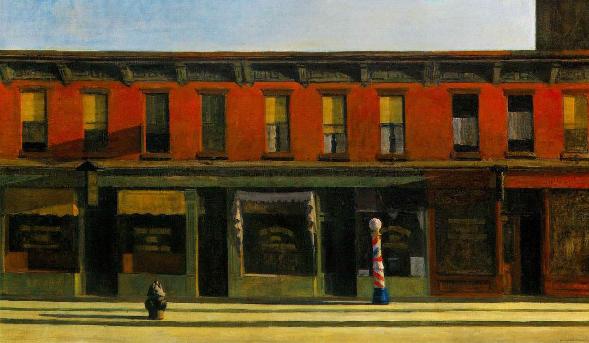 Edward Hopper, Sunday Morning, 1930 Our students are about to turn subcognitive . . . At stake [is] . . . the most basic form of cognitive fluency [AI use] deprive(s) [students] of indispensable opportunities to develop their linguistic mastery, and with it their most elementary powers of thought. Developing our linguistic capacities — to master diverse concepts, to follow an intricate argument, to form judgments, to communicate those to others — is the development of our capacity to think. A depleted conceptual reservoir would render our lives crude and our experience of the world undifferentiated and coarse. Worst of all, cognitive degradation threatens our claim to self-rule.  John Kane, The Boulevard of the Allies, 1932 |
"Why Even Basic A.I. Use Is So Bad for Students" by Anastasia Berg (New York Times, Oct. 29, 2025). Dr. Berg teaches philosophy at the University of California, Irvine. Last spring, it
became clear to me that over half the students in my large general
education lecture course had used artificial intelligence tools,
contrary to my explicit policy, to write their final take-home exams.
My situation was hardly unique — rampant A.I. cheating has been reported all over the country. But I felt a dread I struggled to express until a colleague articulated the problem in stark terms: “Our students are about to turn subcognitive,” she said. That was it. At stake are not just specialized academic skills or refined habits of mind, but also the most basic form of cognitive fluency. To leave our students to their own devices — which is to say, to the devices of A.I. companies — is to deprive them of indispensable opportunities to develop their linguistic mastery, and with it their most elementary powers of thought. Yet I have come to see that something far more fundamental is being put at risk. Developing our linguistic capacities — to master diverse concepts, to follow an intricate argument, to form judgments, to communicate those to others — is the development of our capacity to think. For us human beings, using language is not a skill like any other — it is the way we do almost anything at all. Philosophers have disputed whether beings could exist that could think despite lacking language, but it is clear that humans cannot do so. We grasp the very contours of our world in and through language. But we are not born with a language. We have to acquire and develop our linguistic capacities through immersive practice with other human beings. For hundreds of years, in advanced societies this has meant cultivating an intimate familiarity with human writing. A depleted conceptual reservoir would render our lives crude and our experience of the world undifferentiated and coarse. Worst of all, cognitive degradation threatens our claim to self-rule: It is far from obvious that the denizens of the subcognitive society would be fit to participate in the democratic processes that determine how we structure our societies and lives. Higher education aims to create cognitively mature adults, which in turn requires us to ensure students learn to read, think and write all on their own. It is easier than we think: Creating tech-free spaces and incentivizing students to spend time in them requires no new resources. All it takes is will. Many of our students still have it. Do their teachers? |
speaking of (artificial) intelligence . . .
Five Approaches to "Intelligence" summarizes the main contemporary approaches to "intelligence." In general, this site is in tune with Ceci's emphasis on cognitive complexity rather than "intelligence"--in my formulation, cognitive-discursive performativity--as opposed to the inherently racist notion of the intelligence qua IQ score. Thus, the psychometric approach, which eschews entirely the historical and developmental dimensions human societies, is of little use. Donald and Flynn on the essence of modernity: formal operational cognitive-discursive performativity, the sine qua non of science, technology, and modern public administration. See Merlin Donald's chart below. Below this chart is Piaget's Stages of Cognitive Development. Evolution "On Purpose": Teleonomy in Living Systems, Edited by: Peter A. Corning, Stuart A. Kauffman, Denis Noble, James A. Shapiro, Richard I. Vane-Wright, Addy Pross (The MIT Press, 2023) Ken Richardson's Understanding Intelligence (Cambridge, 2022) is the current progressive state-of-the-art synthesis of the field. On Piaget and Vygotsky: Jerome Bruner, "Celebrating divergence: Piaget and Vygotsky" Human Development 40.2 (Mar/Apr 1997): 63-73. (Excerpt) On psychoanalytic approaches, read esp. Zaretsky, Ehrenberg, and Clarke Alain Ehrenberg, The Weariness of the Self: Diagnosing the History of Depression in the Contemporary Age (McGill-Queens University Press, 2010)
Simon Clarke, Social Theory, Psychoanalysis and Racism (Palgrave Macmillan, 2003) Eli Zaretsky, Secrets of the Soul: a Social and cultural history of psychoanalysis (Vintage, 2004) On artificial intelligence. The populist discussion of artificial intelligence (MSNBC, CNN, Fox News and the even more anti-intellectual social media) proceeds unhindered by knowledge of the relevant bodies of knowledge regarding . . . intelligence. The term is used as a shibbolth, one of many, in the acting out of the disintegration of Reason. |
Five Approaches to Intelligence
|
Successive layers in the evolution of human cognition and culture
Table 7.1 from Merlin Donald, A mind so Rare (Norton, 2001), p. 260
Piaget's Stages of Cognitive Development from The Development of Children by Cynthia Lightfoot, Michael Cole, and Sheila R. Cole (Sixth Edition, 2009)
Cognitive dimension of fascism--see Semiotic Regimes 2024, semiotic regimes 2
the first order "principles" of fascism
|